

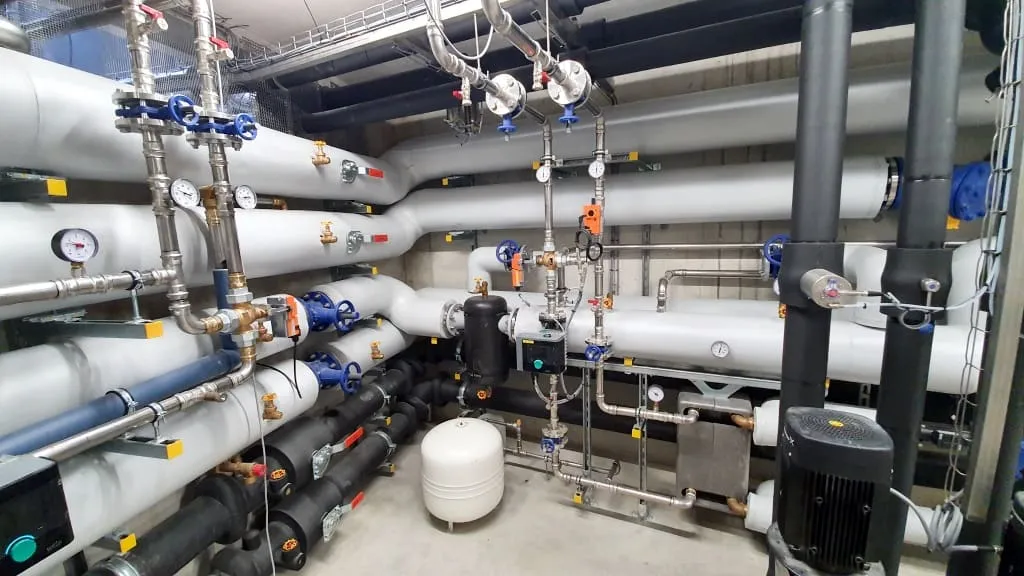
“Tradespeople rely heavily on experience and rules of thumb. That includes the design of heating and cooling systems. To avoid unnecessary risks, they build in a considerable reserve. This leads to unnecessarily high costs,” explains Michael Eberle, Head of Modelling and Simulation at Eberle Automatische Systeme. The Eberle team takes a different approach. The approach taken by Michael Eberle and his colleagues is technically and scientifically sound; they work with digital models. “We apply
simulations and scientific methods,” explains Eberle.
The aim is to turn a company building into an intelligent machine. To this end, a bachelor’s thesis at the Dornbirn University of Applied Sciences was supported, which examined the economic benefits of various heating and cooling systems. The result is now being incorporated into the planning of the new company building. In cooperation with the Energieinstitut Vorarlberg, a detailed simulation was also used to determine the energy demand for heating and cooling. This takes into account the number of people in the building, their
working days and the heat given off by the IT systems. The climate, with temperature and weather conditions, is likewise integrated into the simulation. The result: the expected heating output in winter and cooling output
in summer.
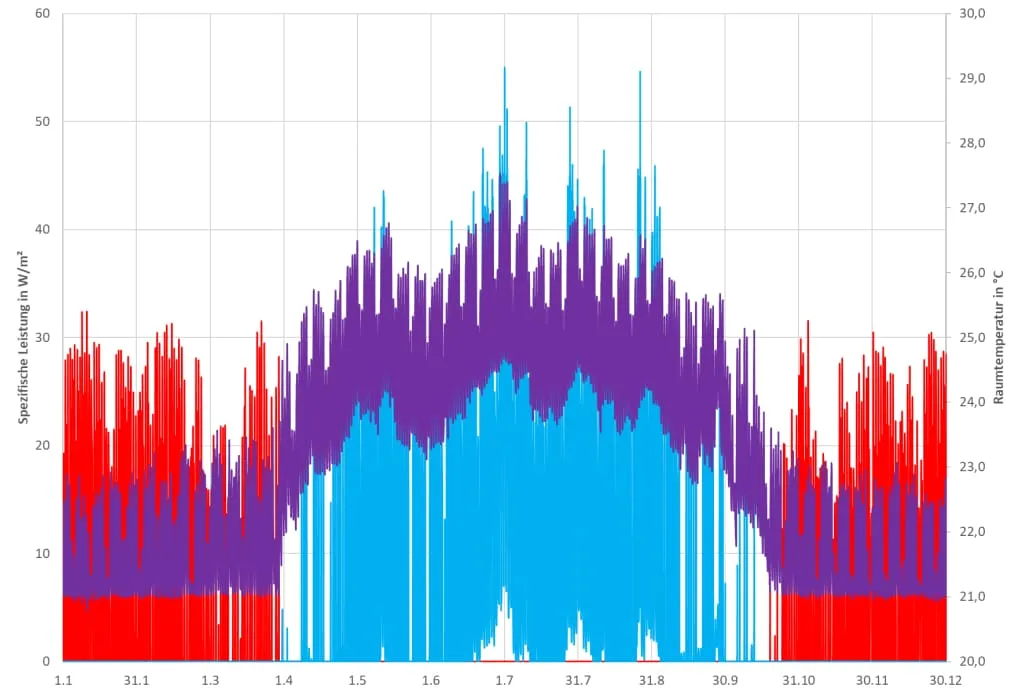
The simulation also raises new questions, however: since geothermal energy can only provide the cooling output if a switch is made to heat-protection glazing, things such as the supply of heat and cooling to the building have to be reconsidered. “Ultimately, it is about creating a perfect, comfortable climate,” explains Michael Eberle, describing the goal.
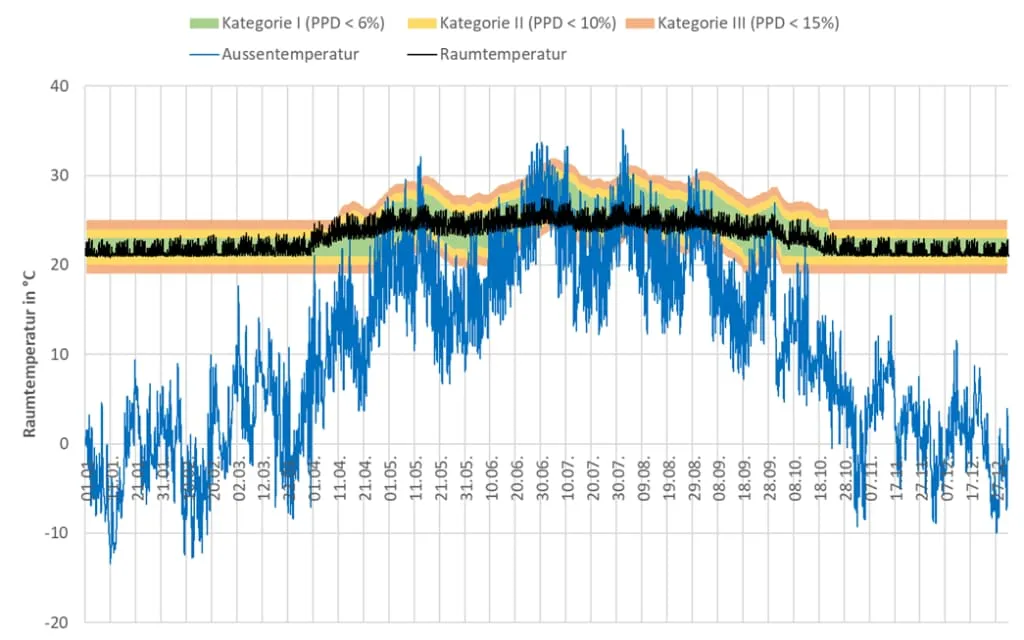
The waste heat produced during cooling travels through the geothermal system into the ground. In further simulations, how the ground will behave over the next 50 years was calculated. With the result of this simulation, the components geothermal energy, insulation and façade, as well as energy distribution, can then be matched to one another. In the end, the intelligent and optimal use of thermal energy means less CO2 is consumed overall – a figure that adds up over the next 50 years.
Heating and cooling therefore does not just mean installing tried-and-tested technology. Heating and cooling also means working with new methods and technologies. This makes it possible to look ahead and calculate, adjust and optimise. And this achieves a more efficient result.