

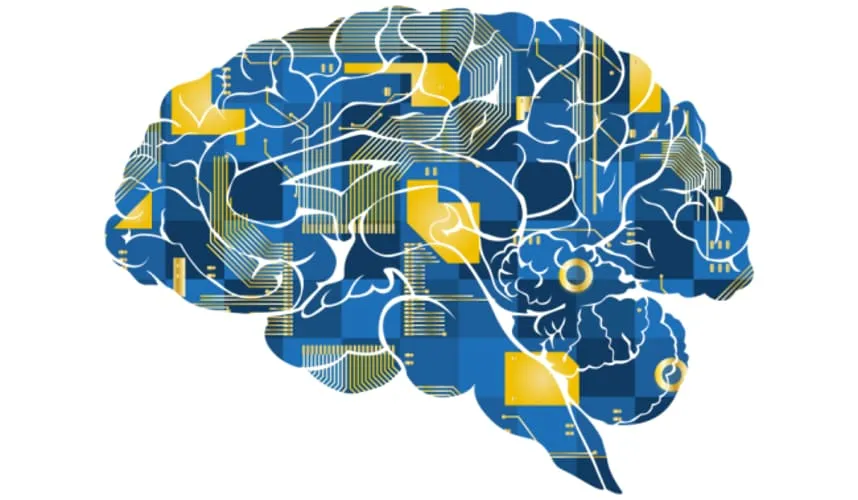
For us, the square is identity. This is visible from the outside in our company logo. The different shades of the squares in our logo represent digital pixels. In this way our square builds a bridge to digital technology. As the pixel of a digital image, it decides, for example, between good and poor quality of a product. With a square there is no discussion – all sides are the same length. This makes it look pleasing, and distortions are immediately apparent.
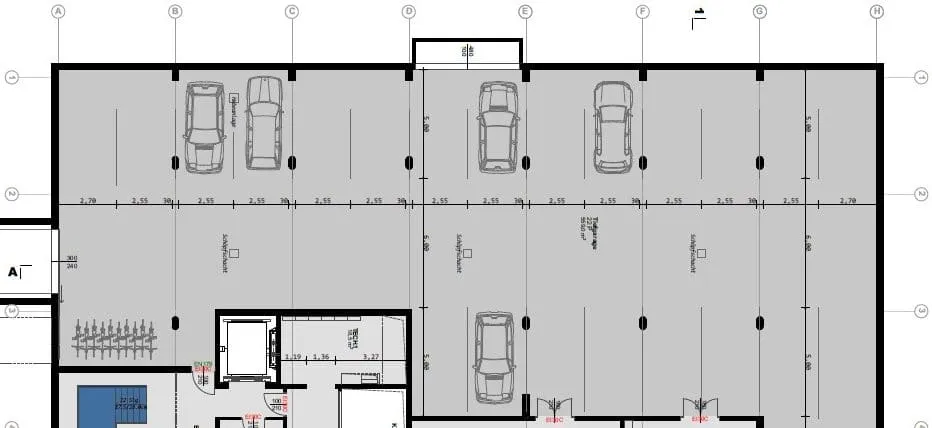
A square can be cascaded well, and almost any shape can be created with it. No gaps or wedges arise between the individual squares. That is why we also apply the square in our new building. Here, however, we are talking about a grid, which we chose to be square. The consistent use of the square grid from the piles in the ground, through the basement, up to the roof has enormous advantages. From a structural point of view, the forces can thus be transferred well down to the piles. For the room layout, sensible sizes result without awkward angles. What is decisive, however, is that the grid is dimensioned correctly. With a well-thought-out design, the result is perfectly proportioned underground car park spaces, workshop areas without columns and very generous office workstations.
Paradigm shift to digital engineering
Our square also accompanies us in the shift to digital engineering and the associated 3D modelling.
Squares can be joined together to obtain new shapes. The only thing that does not work is slopes – or does it?
We manage this by moving into 3D space. We lay our squares out in space and obtain perspective slopes, and are thus in the third dimension. Apart from the fact that slopes are always laborious to manufacture, we have nevertheless developed a digital-optical solution for them. This becomes visible in our own brands such as digifai.com
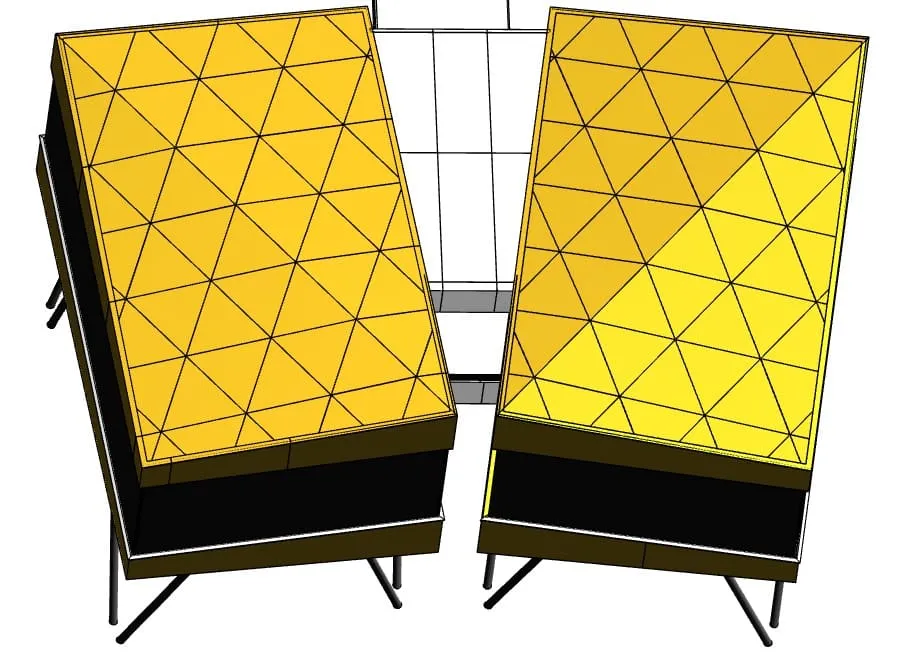
In automation technology, the third dimension has long since made its entrance. Designs are made in 3D, parts are manufactured additively and images are captured with 3D cameras. That software is now also tested and simulated digitally on 3D models is new. As a symbol we use our square again and arrange it in perspective. The square thereby mutates into a triangle, which in turn is the smallest element in 3D models. Depending on the data format, a 3D model consists in detail of an arrangement of triangles.
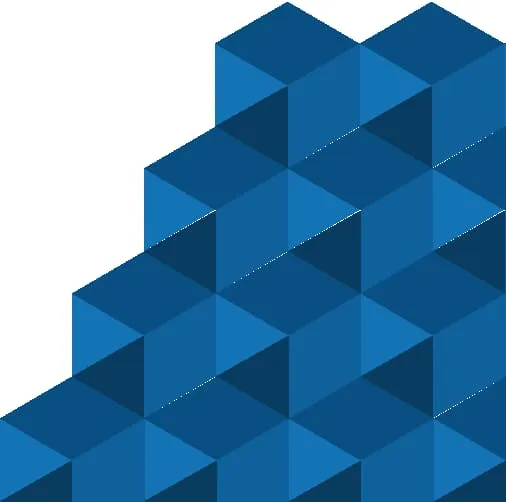
Our square thus undergoes a transformation too. Arranging it in 3D space creates new shapes and effects. Will it continue like this with the new dimensions in future? We are building our Future Factory for these and future research questions. Square, of course – and therefore practical too.
Yours, Martin Eberle, CEO Eberle Automatische Systeme GmbH&CoKG